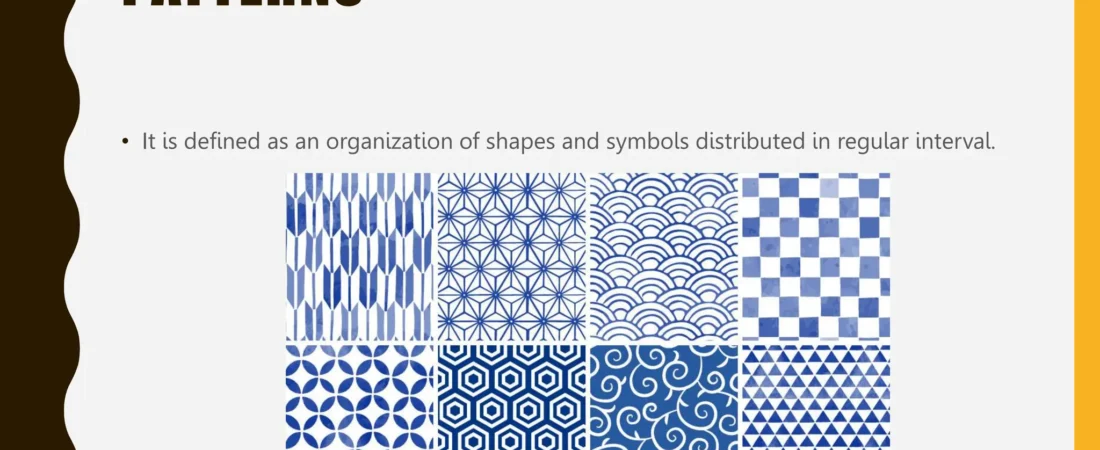
Modern life can seem chaotic. Cities are filled with traffic, phones constantly receive notifications, machines operate around the clock, and enormous amounts of information move through invisible networks every second. Yet beneath this apparent complexity lies a surprisingly simple idea: patterns.
Patterns are repeated structures, rhythms, relationships, and sequences. They appear everywhere, from the vibrations of atoms to the movement of planets, from the signals inside computers to the rhythms of human speech. Technology works because engineers learn to recognize these patterns, reproduce them, measure them, and control them.
Much of modern civilization depends on patterns that we cannot see.
The electrical current powering a home follows carefully controlled cycles. Wireless communication depends on patterns encoded into electromagnetic waves. Digital information is represented through sequences of symbols. Machines reveal their condition through patterns of vibration. Medical equipment detects patterns in biological signals.
Understanding these hidden patterns provides a new way to understand the modern world.
The Power of Repetition
At the heart of many patterns is repetition.
A vibration repeats movement around a position. A wave repeats a changing pattern as it travels. An electrical signal can alternate repeatedly. A processor uses regular timing cycles to coordinate operations.
Frequency is one way of measuring repetition. It tells us how many cycles occur during a particular period, usually one second.
This simple measurement has enormous importance.
A sound wave may vibrate hundreds or thousands of times per second. An electrical system may operate at a frequency of 50 or 60 cycles per second. A modern processor may operate according to a clock measured in billions of cycles per second.
Different systems operate at dramatically different rhythms, but the underlying concept remains the same.
Repeated patterns create predictable behavior.
And predictability is one of the foundations of technology.
Patterns in Electricity
Electricity is one of the clearest examples of patterns powering modern life.
In an alternating-current electrical system, voltage and current change direction periodically. The regularity of these changes allows generators, transformers, motors, and other components to operate together.
Power grids are carefully managed systems.
Electricity demand changes throughout the day, while generators must respond to those changes. Grid operators monitor electrical conditions, including frequency, to maintain stability.
When millions of homes and businesses use electricity simultaneously, the system must remain synchronized.
This synchronization is possible because the grid follows controlled electrical patterns.
When you switch on a light, charge a phone, or run an appliance, you are using the result of an enormous coordinated network.
The apparent simplicity of household electricity hides a remarkable level of engineering.
Digital Patterns and the Computer Age
Computers operate by manipulating patterns of information.
At the most basic level, digital systems use binary states commonly represented as 0 and 1. Vast amounts of information can be encoded as sequences of these values.
A photograph, song, video, document, or computer program can ultimately be represented as digital patterns.
The power of computing comes from the ability to manipulate these patterns extremely quickly.
Transistors switch between electrical states. Logic circuits combine those states according to rules. Processors execute instructions. Memory stores patterns. Communication systems transmit them.
A digital photograph may appear to us as a colorful image, but inside a computer it is represented by enormous numbers of values.
A song may sound like continuous music, but a digital recording is represented by numerical samples.
The computer transforms patterns into experiences that humans can recognize.
The Hidden Patterns in Wireless Communication
Wireless technology depends on another kind of pattern.
Radio waves can be modified in carefully controlled ways to represent information. A transmitter changes characteristics of a carrier signal, and a receiver detects those changes.
This process allows devices to communicate without physical connections.
When a smartphone sends a message, the information is transformed into a digital representation. That information is processed and transmitted through radio-frequency signals. Network equipment receives and interprets the signal before forwarding the information through other systems.
The process may involve many different stages, but the basic principle remains consistent:
information becomes a pattern, and the pattern becomes a signal.
The receiver’s job is to recognize the pattern and recover the information.
Wi-Fi, cellular networks, Bluetooth, satellite communication, and many other wireless systems depend on variations of this idea.
Patterns in Sound and Music
Music offers one of the most human examples of pattern.
A musical note is produced by vibration. The frequency of that vibration influences pitch, while combinations of frequencies contribute to the characteristic sound of an instrument.
But music is more than individual frequencies.
Melody, rhythm, harmony, and structure all depend on patterns.
A melody is a sequence of notes. Rhythm organizes sounds in time. Harmony creates relationships between different notes. Repetition allows listeners to recognize themes and anticipate what comes next.
The human brain is particularly good at identifying patterns in sound.
This is one reason music can create strong emotional responses. We recognize repetitions, changes, contrasts, and expectations.
Technology has learned to manipulate these same patterns.
Digital audio systems can analyze frequencies, remove unwanted noise, adjust volume, compress files, and reproduce music with remarkable accuracy.
Patterns in Human Speech
Speech is another complex pattern.
When we talk, our vocal system produces rapidly changing sounds. The resulting acoustic signal contains information about words, emotion, emphasis, rhythm, and the identity of the speaker.
Human listeners are remarkably skilled at interpreting these patterns.
Modern speech-recognition technology attempts to perform a similar task using computers.
A microphone captures an acoustic signal. Software analyzes its characteristics and identifies patterns associated with speech. Artificial intelligence can then use statistical and learned relationships to estimate the words being spoken.
The process demonstrates how technology increasingly works by recognizing patterns rather than following only simple predetermined rules.
Patterns in Machines
Machines also communicate through patterns.
A healthy rotating machine produces characteristic vibration patterns. When a component becomes damaged, the pattern may change.
Engineers can install sensors that measure vibration, temperature, pressure, or sound.
The resulting data can be analyzed to identify unusual behavior.
For example, a bearing beginning to fail may produce vibration components at particular frequencies. Detecting these changes early can allow maintenance teams to repair the equipment before a major breakdown occurs.
This approach is increasingly important in modern industry.
Factories can monitor equipment continuously rather than waiting for something to fail.
The machine’s physical behavior becomes a source of information.
Patterns in Transportation
Transportation systems depend on patterns at many levels.
Traffic lights use carefully timed sequences. Railway systems coordinate trains according to schedules and signals. Aircraft navigation relies on precisely calculated information. Modern vehicles use sensors to detect patterns in speed, position, acceleration, and engine behavior.
Cars increasingly contain sophisticated electronic systems.
Sensors monitor the vehicle and send information to computers. These computers can detect changes in conditions and adjust systems accordingly.
Driver-assistance technologies rely heavily on pattern recognition.
Cameras, radar, and other sensors collect data about the surrounding environment. Software analyzes the incoming patterns to identify lanes, vehicles, pedestrians, obstacles, and road conditions.
Transportation is therefore becoming increasingly dependent on machines that can recognize patterns in real time.
Patterns in the Human Body
Patterns are not unique to technology.
The human body is filled with them.
The heart follows a rhythmic cycle. Breathing produces repeating movements. Brain activity contains electrical patterns. Nerve cells transmit sequences of signals.
The body depends on coordination.
When you move your hand, information travels through networks of neurons and muscles. When you hear a sound, mechanical vibrations are converted into neural signals. When you see an object, light is transformed into patterns of electrical activity in the nervous system.
Medical technology can measure some of these patterns.
Heart-monitoring systems record electrical activity. Brain-monitoring equipment can detect patterns of neural activity. Imaging technologies can reveal patterns inside tissues and organs.
By recognizing changes in these patterns, medical professionals can gain valuable information about the body’s condition.
Patterns in Nature
Long before humans built computers or wireless networks, patterns existed in nature.
Waves move across oceans. Seasons follow cycles. Day and night alternate. Crystals form repeating structures. Molecules have characteristic arrangements and vibrations.
Scientists study these patterns to understand physical laws.
Astronomers examine patterns in light to learn about stars and galaxies. Geologists study seismic patterns to understand Earth’s interior. Biologists examine repeating structures in living organisms.
Nature often appears complicated because many simple patterns interact.
This is an important lesson for modern science: complexity does not necessarily mean randomness.
Sometimes complex behavior emerges from relatively simple rules repeated many times.
The Role of Frequency
Frequency is one of the most useful tools for studying patterns.
When something repeats, frequency tells us how quickly the repetition occurs.
Engineers can analyze the frequency content of sound, vibration, electrical signals, and other measurements.
This is especially powerful because complex signals often contain multiple frequencies.
For example, a machine may produce a mixture of vibration frequencies. By separating and analyzing them, engineers can identify specific components or problems.
The same principle applies to sound.
A recording can be analyzed to determine which frequencies are present and how their strengths change over time.
Frequency analysis transforms a complicated signal into information that can be studied systematically.
Patterns and Artificial Intelligence
Artificial intelligence has brought pattern recognition to a new level.
Machine-learning systems can process enormous quantities of data and identify relationships within them.
Image-recognition systems search for visual patterns. Speech systems identify acoustic patterns. Recommendation systems analyze patterns in user behavior. Scientific models can search for patterns in complex measurements.
The key advantage of AI is not simply speed.
It is the ability to identify relationships across huge datasets.
However, pattern recognition also requires caution.
A pattern in data does not automatically prove that one thing causes another. Systems can identify correlations that are misleading or based on incomplete information.
Human judgment remains important when interpreting patterns.
Patterns and the Internet of Things
As more devices become connected, the number of measurable patterns is increasing rapidly.
Smart buildings can monitor temperature, lighting, energy consumption, and occupancy. Industrial equipment can report its condition. Wearable devices can collect information about movement and activity.
This interconnected environment is sometimes described as the Internet of Things.
Its potential comes from turning physical activity into data.
A sensor measures something. The measurement becomes a digital signal. The signal is transmitted and analyzed. A system then responds.
For example, a building could detect changing conditions and automatically adjust heating or cooling.
The physical world becomes increasingly responsive because machines can recognize patterns and act on them.
The Challenge of Too Much Data
More patterns do not always mean more understanding.
Modern systems can generate enormous quantities of information. Sensors may produce thousands or millions of measurements over time.
The challenge is determining which patterns are meaningful.
A useful system must distinguish important changes from ordinary variation and random noise.
This is why data analysis is becoming increasingly important.
Technology needs not only better sensors but also better methods for interpreting what those sensors detect.
The future of intelligent systems will depend partly on their ability to identify the right patterns at the right time.
Designing a World Around Patterns
Engineers intentionally create patterns as well.
Computer processors use clock cycles. Communication systems use structured data formats. Digital networks use protocols. Musical technologies use sampling patterns. Control systems use repeating measurements and feedback.
Patterns create structure.
Structure makes complex systems manageable.
Without shared patterns and rules, modern technological systems could not communicate effectively.
A computer built by one manufacturer can communicate with a device made by another because both follow agreed standards and patterns.
The internet is perhaps the largest example of this principle.
Billions of devices can exchange information because they follow common communication rules.
Why Patterns Matter
Patterns matter because they make information recognizable.
A single isolated measurement may tell us very little. A sequence of measurements can reveal a trend. A repeating pattern can reveal a rhythm. A change in a familiar pattern can indicate a problem.
This principle applies everywhere.
A doctor may notice an unusual pattern in a patient’s measurements. An engineer may detect an abnormal machine vibration. A scientist may discover a repeating structure in astronomical data. A computer may recognize a pattern in an image.
Pattern recognition turns observations into understanding.
Conclusion
Modern life is powered by patterns.
Electricity follows repeating cycles. Computers manipulate digital sequences. Wireless networks transmit structured signals. Music is built from organized sound. Machines reveal their condition through vibration. Human bodies depend on biological rhythms. Artificial intelligence learns from patterns in data.
These systems may appear unrelated, but they share a common foundation.
They depend on detecting, creating, transmitting, and interpreting patterns.
The deeper lesson is that patterns connect the physical and digital worlds. A vibration can become an electrical signal. An electrical signal can become digital information. Digital information can become an image, a voice, a command, or a decision.
Modern technology is essentially a vast network for transforming patterns.
As the world becomes more connected, the importance of pattern recognition will continue to grow. Sensors will collect more information, computers will process larger datasets, and intelligent systems will search for relationships hidden within increasingly complex environments.
Yet the fundamental idea will remain remarkably simple.
Look closely enough, and beneath the apparent complexity of modern life are rhythms, sequences, cycles, and relationships repeating again and again.
These are the patterns that power our world.